

The Warsh Regime Begins: An Overview of Modern FOMC Policy and The End of the Powell Era
Written by James Fonzi, CFA®
Kevin Warsh becomes "world's most powerful banker" Friday—here's what changes for your portfolio
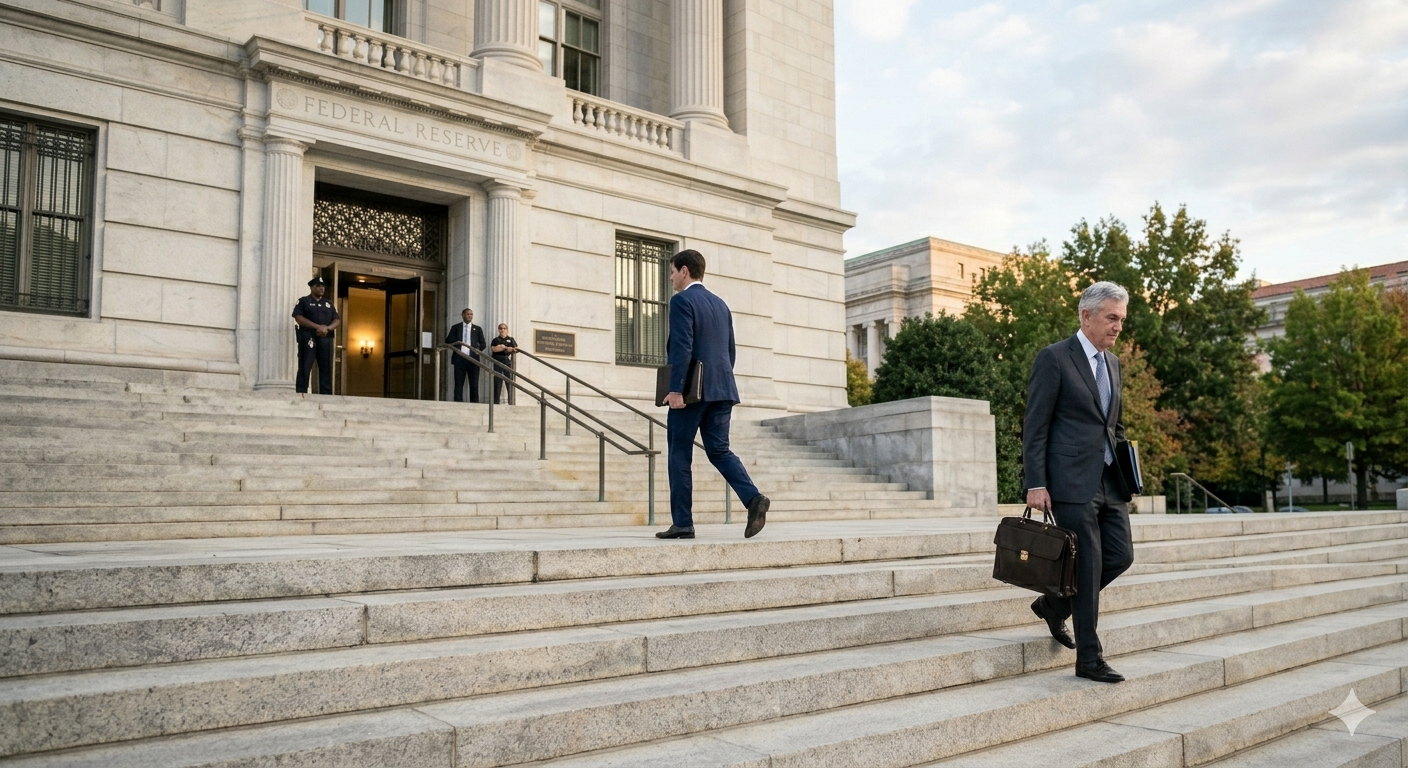
Friday May 22nd, 2026, will mark the end of the Powell Fed as Chairman Jerome Powell passes the torch to President Trump’s nominee, Kevin Warsh. Warsh will serve as the 17th chair in the Fed’s distinguished history and hold the de facto title of world’s “most powerful banker.” Mr. Warsh is no stranger to the institution, having been appointed to the Board of Governors in 2006 in George W Bush’s second term. 35 years old at the time, he was the youngest ever Governor and played a critical role in navigating the Great Financial Crisis, including helping orchestrate Bear Stearns acquisition by JP Morgan and the decision to put Lehman Brothers into bankruptcy. He stepped down in 2011 and returned to his alma mater, Stanford, where he served as lecturer at the business school for many years, and in his return to the private sector became a partner at Duquesne Family Office, run by Wall Street legend Stanley Druckenmiller. Mr. Druckenmiller also mentored current Treasury Secretary Scott Bessent when the two worked together at Soros Quantum Fund in the 1990s. Warsh and Bessent maintain a special relationship to this day, given their shared backgrounds and beliefs.
Since his initial stint at the Fed, Mr. Warsh has been particularly critical of what he believes to have been ‘mission creep’ by the US Central Bank. Seemingly perpetual quantitative easing, excessive forward guidance and using backward-looking data resulting in a pattern of being late or slow to recognize and respond to shifts in the macroeconomy are just some of the criticisms he has offered over the years. A proponent of a smaller central bank balance sheet, Mr. Warsh believes inflation is a choice and that more coordination between the Treasury and the Fed is prudent if not paramount. The soon-to-be Fed Chair also shares the view that productivity gains from artificial intelligence will be a disinflationary force in the coming years, supporting the case for lower interest rates.
With President Trump exercising aggressive executive authority in his second term, there are concerns that under Warsh, the Fed’s independence may be compromised. Those close to Warsh insist his intellectual rigor and character will ensure he does not bow to political pressure and will do what’s best for the country, even if it’s not popular with the President. Time will tell whether Mr. Warsh will be unduly influenced by the administration or whether he will chart his own course.
Perhaps setting the table for some palace intrigue, Powell has broken precedent by not leaving the Central Bank when his term as Chair ends, indicating he intends to remain on the Fed Board of Governors for the duration of his term, running until January 2028. He may regret accepting the post when it becomes clear that the daunting task ahead. All that said, the institution is more than any one man or woman; the Chair’s role is as important as ever as we navigate these challenging times with elevated inflation and growing debts and deficits. Getting the job is one thing; executing effectively is another.
The following is a quick recap of the FOMC remit, along with a mechanical overview of modern policy tools and future considerations.
Regular Maintenance – FOMC Policy Implementation and Effectuation
Like any reliable piece of machinery, the US economy and other developed markets around the world require regular maintenance and oversight. Whether that has led to better or worse overall outcomes is a debate for another time. Metaphors aside, it is no secret that all eyes continue to be on the US Central Bank. Given this, we think it prudent to dedicate part three of our Fed series to a discussion of the basic mechanics behind FOMC policy implementation, provide a greater understanding of increasingly popular tools like Quantitative Easing and Tightening (“QE” and “QT”) and the perceived value of being overly transparent in the form of forward guidance.
Like credit and business cycles, monetary policy has its own cyclicality and is deeply intertwined with the former. The economy and markets may run above trend, often buoyed by loose monetary policy or animal spirits driving elevated demand. This is often the case following broader recovery and subsequent expansionary phases after a wider slowdown or recession, or in response to minor shocks and stresses that may have prompted some easing bias. As this new expansion peaks, when growth and productivity indicators have begun to run away and create excessive upward inflationary pressures, the FOMC has the policy tools to slowly taper the money supply to squeeze out these excess growth and spending drivers. Despite seeming black and white, this cyclicality is not always easy to detect and takes place on a more gradual plane, given the pace of economic data and the abundance of variables that contribute to it.
FOMC members rely on economic data from their districts and the government to make calculated decisions on monetary policy and the path of interest rates over time while maximizing employment and keeping consumer prices stable (as we have discussed in earlier pieces, the “Dual Mandate”). For years the decision around overnight interest rate policy was the blunt tool of the Fed. But as the economy has become more complex and perhaps less interest rate sensitive, the Fed incorporated other tools to influence the economic cycle.
Quantitative Easing – Loosening the Screws
Central Banks around the world have many conventional measures of monetary policy implementation, such as increasing and decreasing interest rates and maintaining ample reserves as a backstop; however, if such measures prove less than effective, more aggressive avenues in open-market operations may be warranted. Beyond these day-to-day operations, the two most important open-market regimes to understand that the Fed and other Central Banks utilize to further effectuate their monetary policy stance are QE and QT. Although they have existed to varying degrees since the start of Central Banking, easing and tightening have become two popular modern policy tools for central banks in developed economies, especially after the Great Financial Crisis in 2007-09. QE and QT allow Central Banks to take immediate action while tempering the speed of policy implementation as data becomes available. It has become the Fed’s preferred tool in pursuit of their dual mandate.
In the case of QE, a Central Bank’s open-market operations are focused on injecting liquidity into the financial system to mitigate economic headwinds spurred by recession, persistent below-target inflation, or financial crises – each of which may be a product of the other(s). To ‘inject’ this liquidity, the Fed first creates excess bank reserves. These reserves are in effect a liability on the Fed’s balance sheet. The Fed then uses this new money to purchase securities in the open markets from other financial institutions, which may consist of treasury securities, agency MBS, federal agency debentures, and, in rare cases, corporate bonds, as we saw during the COVID-19 pandemic. This security buying bolsters demand in the bond market, driving yields lower and increasing the amount of excess cash circulating in the financial system. Banks will use the excess liquidity to expand their credit—essentially, widening their parameters for what they consider ideal borrowers—and lend to commercial entities and consumers, with the hope that it serves as a catalyst for spurring economic growth.
In a perfect world, it is hard to see how anything could go wrong, but we are not fooled. Our economy is a complex web of individual behaviors and variables, making a discussion of the risks QE poses (some of which we have experienced recently) worthwhile. Perhaps the most obvious of QE is that the increased money supply can spur growth to a point where financial and real asset prices (e.g. housing) rise at a frenetic pace and the economy ‘overheats’, leading to sharp, persistent inflation. This can also put downward pressure on the domestic currency (though a situationally weaker dollar isn't always a negative development, as it makes US exports cheaper to foreign consumers, which can be a growth catalyst). Another central risk is that financial institutions may simply exhibit reluctance to expand their credit portfolios, failing to spur growth entirely.
Quantitative Tightening – Tightening the Bolts
Monetary policy is always a balancing act. Cheap money cannot exist forever. It is then that the Fed begins to reverse course and reduce the money supply via the shrinking of the Fed’s balance sheet.
In contrast to QE, QT involves the reduction of the money supply via the shrinking of the Fed’s balance sheet. Following a QE regime, the Fed can let a set number of securities ‘roll off’ the balance sheet each month at maturity. The Fed receives the proceeds from the US Treasury at maturity like any other bondholder would (though in this case, the Treasury will debit its cash balance held at the Federal Reserve, rather than truly paying cash). When the Treasury needs to raise additional cash after these maturities, it will hold auctions for new on-the-run bonds. Rather than purchasing large quantities at auction, the Fed makes way for other institutions to purchase them. This reduces systemwide cash reserves, tightening liquidity. The centripetal goal of QT operations is to compress inflation back to the desired target rate and normalize interest rates to a steady long-run level.
QT is also not without its risks. It puts upward pressure on interest rates, meaning bond yields advance higher. Because bond prices have an inverse relationship with yields, rapidly instituted hikes can cause bond prices to fall sharply, especially for long-term bonds. The world got a taste of this in the short-lived banking crisis in early 2023 with the collapse of Silicon Valley Bank (“SVB”), Silvergate Bank, and Signature Bank. In the case of SVB, the bank held a large portfolio of long-term bonds against its liabilities (namely low-coupon Agency MBS). As the Fed hiked, yields naturally rose and those bond prices fell, resulting in massive unrealized losses. This asset-liability mismatch led to a run on the bank and widespread panic, which was thankfully contained when the Fed rolled out the Bank Term Funding Program (BTFP) to allow banks to pledge those underwater bonds at par value. QT also increases current and future borrowing costs for market participants that rely on debt financing. Maintaining leverage at more expensive rates can at times, increase financial stress in the system and there is a risk that a Central Bank squeezes out liquidity to an extent where it strains the financial system beyond intention. On the contrary, it can also help backstop and avert a crisis in situations where other market participants are not buyers of large swaths of fixed income assets. This is why many argue that instituting QE and QT as the antidote to one another creates a perpetual cycle in the monetary policy setting.
Managing Expectations – If It’s BrokeN, We Can (Try to) Fix It
Under the regime of “the Maestro”, Alan Greenspan, or his predecessors, it was not uncommon for the market to be surprised, or worse, caught offside by interest rate decisions. Starting in 1994 the Fed would announce its policy decision, but always after the fact. By the early 2000s the stance shifted to "Forward Guidance" and using open communication to signal their interpretation of the data to smooth the market’s ability to adjust.
What may have been a well-intended decision has turned into something of a spectacle, with a different Fed official offering their view almost daily, outside of the blackout period that predates a meeting. Going a step further, the Summary of Economic Projections (SEP) was introduced in 2007. If predicting what would happen between the present time and the next policy meeting wasn't hard enough, creating an economic scorecard with guesstimates on data 24-36 months out seemed altogether foolish. It should be no surprise to anyone if the new Fed Chair were to curtail the speaking engagements for the FOMC, especially the voting members, and scrap the SEP altogether. The noise from excessive “Fedspeak” has done little to further their mission, largely just creating justified speculation for the trader crowd.
The Current Narrative
The Fed implemented a vast QE program to ease market strains during the COVID-19 pandemic. In response to the resulting inflation, they began a rate-hiking cycle in March of 2022 through July 2023, simultaneously tapering their $9 trillion balance sheet. As of January 2026, current reserves at the Fed are approximately $3 trillion, which tends to be the amount seen as “ample” by a large majority of FOMC members.
The latest QT cycle effectively ended in December 2025. After a 25-bps cut in that meeting, multiple 25-bps cuts had been priced into the markets for 2026; however, the War with Iran and the resulting closure of the Strait of Hormuz have led to fears of lingering inflation and a hawkish Fed stance. The April FOMC meeting delivered the widely anticipated hold and hawkish undertone, maintaining a federal funds rate at the 3.50% - 3.75% target range. Initially, multiple voting members stating their dissent from the Fed’s current easing bias left markets uncertain. The release of the April meeting minutes this week provided crucial clarity on a growing hawkish division, revealing a broader committee consensus that risks to inflation continued to tilt to the upside. By combining these minutes with the Summary of Economic Projections (SEP) and recent FOMC commentary from the March minutes as well, we can find the nuance behind the headline-grabbing “hike, hold, cut” debate:
- Inflation Driven by Energy Prices and the War in Iran: FOMC members have directly acknowledged the conflict and the resulting surge in oil prices (which pushed to highs of $138 on Brent Crude in early April). While initially viewed as a transitory shock—given that energy prices are historically elastic—the latest minutes reveal growing committee apprehension explicitly noting that inflation has moved higher. The longer the Strait remains closed and a peace deal elusive, the more these prices pose near-to-medium-term risks of bleeding into supply chains, airlines, and agriculture, exacerbating recent inflation woes.
- The Labor Market: Unemployment has softened in the eyes of the committee. The April minutes confirm officials view the labor market as slowing but resilient enough to tolerate a prolonged restrictive stance.
- Rate Hikes are not Base Case but Discussed: Traders are taking the threat of a hike seriously, pricing in a fed funds rate of 3.835% by January 2027. However, the committee reiterated adamantly that this is not their base case and pushed back against the use of ‘stagflation.’
This gives a clear picture of a hawkish wait-and-see approach. With this in mind, let’s look at the resulting headwinds and tailwinds for investors:
Headwinds:
- Delayed Easing Timeline: The median path among respondents in the Fed's Desk survey has shifted materially. Markets have capitulated on summer cuts, pushing expectations into late 2026 or early 2027.
- Supply-Side Inflation from Geopolitical Tensions: The shock from the conflict in Iran cannot be fixed with monetary policy. Revamped tariffs and oil price shocks have led to an expected increase in core PCE of 2.7% for 2026. We will get more clarity when April Core-PCE data is released on May 29th, where a reacceleration is expected.
- A Deepening Committee Divide: The April meeting featured a highly unusual 8-4 vote split, the most divided split since 1992. While Stephen Miran dissented because he wanted a 25-bps cut, three other members (Beth Hammack, Neel Kashkari, and Lorie Logan) opposed an "easing bias" in the institution’s guidance. This fracture in consensus injects a new layer of policy uncertainty as Kevin Warsh steps in as Chair, leaving markets to wonder if the hawkish wing of the Fed is gaining control.
Tailwinds:
- Resilient Corporate Earnings: The Fed's minutes affirmed that economic activity continues to expand at a solid pace, largely bolstered by a strong corporate earnings season post-Q1.
- Base Case is not Rate Hikes: Though discussion of rate hikes is worthy of some concern and many foreign central banks have already begun to price them in (the ECB, for example), the core voting bloc is not overreacting to a hopefully transitory energy shock (though “transitory” will become fleeting the longer conditions persist). This puts a ceiling on the Fed's hawkishness, providing a margin of safety for asset valuations.
- Ongoing Balance Sheet Support: The Fed confirmed they will continue purchasing shorter-term Treasury securities as needed, ensuring an ample supply of reserves in the banking system and reducing the risk of liquidity shocks in the treasury market even as rates remain elevated and continue to rise.
Although volatility is likely here to stay for a while, the Fed is doing what we as investors should do during turbulent times: staying measured and on course. Erratic decisions rarely lead to desirable outcomes. As Chair Powell’s term comes to an end, he will likely be remembered as the most crisis-tested Fed Chair since Paul Volcker and will carry a two-sided legacy. He masterfully navigated the COVID-19 crisis, going to absolute extremes to sow financial market stability while later ushering in a ‘soft landing’. On the contrary, he may also be remembered as an architect of a liquidity hangover that may have permanently distorted asset valuations. Where he was most masterful was as a public servant, maintaining the Fed’s institutional credibility despite political pressures from both sides of the aisle throughout his two terms – an honorable feat.
As his second term winds down and we welcome Chair Warsh, we have some idea of what to expect. Known for his hawkish stance on inflation and skepticism around quantitative easing, Warsh sets out with a commitment to narrow the Fed’s mandate and shrink its balance sheet. Markets will closely monitor the balance of its historic hawkishness against current political pressures to lower interest rates. Chair Powell landed softly on our way here, let’s see if Warsh can land the plane softly on the way back.
It is my sincere hope that readers enjoyed this three-part series. Any questions or feedback about the topics discussed will be happily received by myself and the Breakwater team.
The views expressed represent the opinions of Breakwater Capital Group as of the date noted and are subject to change. These views are not intended as a forecast, a guarantee of future results, investment recommendation, or an offer to buy or sell any securities. The information provided is of a general nature and should not be construed as investment advice or to provide any investment, tax, financial or legal advice or service to any person. The information contained has been compiled from sources deemed reliable, yet accuracy is not guaranteed. Additional information, including management fees and expenses, is provided on our Form ADV Part 2 available upon request or at the SEC’s Investment Adviser Public Disclosure website,
www.adviserinfo.sec.gov. Past performance is not a guarantee of future results.

Breakwater Team
At Breakwater Capital, we work with families across the United States, providing each client with a personalized experience tailored to their current circumstances, future goals, and timelines.





Financial Literacy Is Not Enough and Why Strategy is the Real Differentiator in Today’s Wealth Shift