Jeffrey Hanson, CFP®

Managing Member, Chief Investment Officer

With 23 years in the financial services industry, Jeff brings a wealth of knowledge and experience to his client relationships. A Certified Financial Planner since 2007, he spent the first 21+ years of his career at Fidelity Investments, 18 years of which supporting high net worth and ultra-high net worth clients out of the Northern NJ office. A seven-time President’s Circle recipient, he is both tireless and passionate about helping his clients achieve their unique financial objectives. The son of an engineer, he is a natural problem solver, who believes attention to detail, close communication and collaboration are critical attributes of a healthy partnership.


Born and raised on Cape Cod, Jeff is a graduate Fairfield University (B.S. ’00) He and his beautiful wife Courtney live in Ridgewood, NJ with their two young sons, Declan and Reid. When he is not spending time with the family you can catch him on a long run, relaxing at the beach or with his head buried in a book (only non-fiction) given his intellectual curiosity. Though he has been in the Tri-state for many years he is an avid Boston sports fan given his Massachusetts roots.

Schedule Time with Jeffrey

Connect with Jeffrey Hanson, CFP®

Contact Us

Blogs

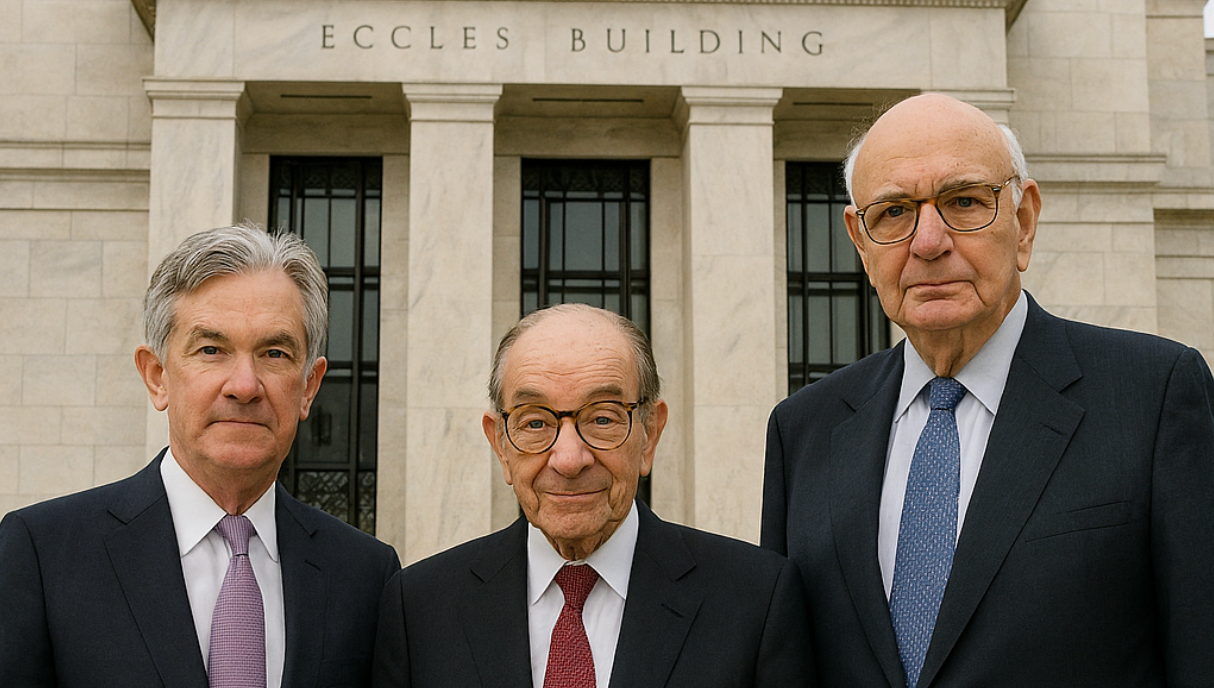
three old white men in suits who look like businessmen standing in front of a federal building
November 20, 2025
Learn about the US Federal Reserve System's structure, history, and current leadership. Understand the Fed's dual mandate, FOMC meetings, and how Fed policy decisions impact investors and consumers.
October 13, 2025
Market outlook for Q4 2025: Fed rate cuts and strong earnings fuel gains, but elevated valuations, rising deficits, and speculative bubbles in gold and AI warrant caution. Learn what's ahead for investors.
By Breakwater Team April 4, 2025
…grant me the serenity to accept the things I cannot change, the courage to change the things I can, and the wisdom to know the difference. – Reinhold Niebuhr In a year that had already witnessed a noticeable uptick in volatility compared to the prior two years, the ongoing back and forth regarding looming tariffs, culminated in what has been described by many pundits as some of the most aggressive levies introduced since the 1890s. While the policy announcements themselves have been well telegraphed, the scope and scale are considerably higher than what was expected, as evidenced by the market’s harsh response. Rather than imposing tariffs based on pre-existing trade protections with our counterparties (i.e., existing tariffs, subsidies, or other barriers to entry) the formula to arrive at the tariffs focused more on the trade imbalance between the two nations. As the largest economy in the world, trading with nearly everyone, many of which are much smaller countries/economies, this was ripe for distortion. For those who have been long time followers of President Trump’s beliefs this should come as little surprise, a recent piece in the WSJ captures quotes dating back to the 1980s which share his perspective that the US was drawing the short straw and other nations should have to pay to access our robust and dynamic economy.  Going back to the days of the earliest trade when men roamed the earth hunting for food there has always been some degree of mercantilism whereby one group looks to accumulate power and wealth and protect their own interests, but in the Post World War II era, it’s inarguable that the US has benefited enormously from their embrace of “free trade” and capitalism. Our economy has grown a hundredfold since 1950 when it was approximately $270BB. The naysayers will point out that back then the US accounted for about 50% of global GDP, peak wealth, or about twice what it is today, but that fails to account for the fact that much of the world having fought the theatres of war in both Europe and the Pacific was in ruin and needing to be rebuilt. There is a misconception that both NAFTA (1994) and China’s entry into the World Trade Organization (2001) were the watershed moments leading to the hollowing out of the US’s manufacturing base, but in reality manufacturing employment had been in decline going back to 1950. At its peak US manufacturing workers accounted for about 30-35% of the nonfarm workforce, whereas today that level sits at around 8% where it has hovered for the last 15 years. In 2000 it was just 15% so still very much the minority. This long-term shift in the mix of the US economy where services now account for a disproportionate percentage of GDP and the workforce overall is the result of a far more skilled workforce driving both innovation and productivity. Surely some manufacturing jobs have left based on the focus on corporate profits, but some of the change relates to comparative advantage and inexpensive labor. It’s not to say, that we should look to push all manufacturing to the most “efficient” destination, surely it’s important to maintain control of manufacturing of critical components to defense, information technology or medicine, but it seems unrealistic at best to expect that we can produce enough and at reasonable costs to satisfy our insatiable demand. We are after all only about 5% of the world’s population, though we account for 25% of global GDP. Talk about punching above our weight. Aside from the logistical challenges that reshoring/onshoring pose, not to mention the timeline associated with the payback for such efforts, the willingness or lack thereof on the part of the business and consumers alike beg the question of whether or not it is worth pursuing. Considering our societal tendencies for policy to reverse course every 4-8 years with Washington’s constant changing of the guard which has grown even more partisan in recent years, it’s hard to envision the private sector making these investments where there may be little or no long-term benefit to the majority of stakeholders, mainly consumers and shareholders alike. If we are being intellectually honest, as we have seen with the likes of Amazon, if automation or robotics can do the work better than human beings, who need benefits and breaks, the case for this policy bolstering manufacturing employment seems weak at best. That’s one of the key pillars of the artificial bull case after all. In addition, there is clear evidence that economies which produce a disproportionate amount of goods versus services are much more susceptible to the boom bust cycle as demand for goods themselves is far more cyclical, look no further than Japan and Germany whose export driven economies have largely languished for the last 20 years in the slow growth/no growth period in the aftermath of the Great Financial Crisis. Let’s put all this into context, according to the World Trade Organization as of 2023 the US had a trade weighted tariff rate of 2.2% lower than nearly all countries around the world. For a country that is such a massive importer one might argue the low levels fostered healthy trade relations with some of our key allies and admittedly some frenemies or altogether poor bedfellows. With these sweeping tariffs, some as high as 49%, this marked a significant shift in policy where the aforementioned tariff rates will approach 30%, having a significant and lasting impact on consumers and businesses alike. Whether you want to describe a tariff as something different than a tax seems to be semantics, the added expense is rarely fully eaten by the producer. In the aftermath of the pandemic and the correspondingly high inflation due to excessive fiscal and monetary policy along with supply side disruptions, its doesn’t require too much detective work to know the average American is exhausted or outraged by higher prices. The tariffs will only add to the price at the register unless we all of a sudden find the private sector extraordinarily benevolent, willing for much if not all of the added costs to result in shrinking margins. By now you have surely figured out why there was such a market kerfuffle, but let’s make sure to fully examine why the result was to shave $3 trillion of market value off of US stocks in one day, which supposedly is the equivalent of 5 years’ worth of tariff receipts. First and foremost, despite opening the year with an economy bumping along with real GDP around 2.50% we have seen a sharp decline in the soft data, where surveys from the confidence board and University of Michigan plumb levels we have not seen going back to the pandemic when fears of a severe respiratory infection and 10% unemployment were front of mind. The hard data has been only a little better as labor has held up thus far, but as we have seen in Retails Sales there are signs that the consumer may be tapped out or growing wearier. With GDP likely to be between negative .5% to positive .50% for Q’1 that it’s like slamming on the brakes while driving in the passing lane. No surprise that there may be a real sense of whiplash. As the odds of a recession have risen, something the President himself acknowledges, it’s safe to assume expectations for earnings growth this year and next seem to be slipping away. With valuations stretched, there has been little margin for error and it’s those stocks, some of the most expensive that have felt the impact that much more acutely. This is why we have heard the “Mag 7” referred to as the “Lag 7” here in early 2025. Now you might be thinking this is likely transitory, a word that is making its rounds again after an ill-feted debut to Wall Street vernacular in 2022. If we are in fact, we are likely to see a shift to a more capital-intensive economy, is it reasonable to justify such high multiples which made more sense in an asset light, intangible heavy ecosystem? It seems hard to justify, from this vantage point. Hopefully, we will avert a recession, but that’s not to say it is an all-clear sign for the stock market. Earnings recessions, like that of 2022, may not lead to large scale job losses and disinflation, but increase the prospects for a bear market. There is a risk here that those fat margins whither because of trade frictions and lead to something more pernicious like a repeat of the stagflation episode of the 1970s and early 1980s where higher inflation sucks the oxygen out of the room leaving little room for real growth. So, what is an investor to do… Well for one thing, maintaining discipline in the form of diversification has helped and likely will continue to, with investors who have roughly half of their portfolio in overseas stocks and fixed income, the positive returns in these two areas have been able to offset some of the decline in US stocks. Incorporating other assets like Treasury Inflation Protected Securities (TIPs), gold or real estate may help mitigate the risk somewhat but as we have seen in the past times of market angst correlations often increase, giving the appearance there is no place to hide. Eventually markets will calm down, as the last of the sellers capitulate, though that process can take weeks or even months to play out. I’ll leave you with some quotes from some of the smartest minds on Wall Street to ponder as we head into the weekend. “Sometimes the share price of a firm tells the CEO of that firm nothing about their company they didn’t already know. Other times, the stock market takes on the role of “active informant.” Stock prices predict investment because they provide business managers with useful information about the future. I think now is probably one of those times. -Neil Dutta, Head of Economics, Renaissance Macro “We all know the math: the stock market has historically grown by 10-11% over the long run but only gone up 60-70% of the time. That means it has corrected 30-40% of the time. Surviving those drawdowns is the price of admission.” -Jurrien Timmer, Director of Global Macro at Fidelity Investments “We are a great nation, the leader of the free world. Yet we squander our political power to appease the textile industry in the Carolinas! We should instead be setting a standard or the world by practicing freedom of competition, of trade, and of enterprise that we preach. -Milton Freidman This presentation is not an offer or a solicitation to buy or sell securities. The information contained in this presentation has been compiled from third-party sources and is believed to be reliable; however, its accuracy is not guaranteed and should not be relied upon in any way whatsoever. This presentation may not be construed as investment, tax or legal advice and does not give investment recommendations. Any opinion included in this report constitutes our judgment as of the date of this report and is subject to change without notice. Additional information, including management fees and expenses, is provided on our Form ADV Part 2 available upon request or at the SEC’s Investment Adviser Public Disclosure website, www.adviserinfo.sec.gov. Past performance is not a guarantee of future results.
By Breakwater Team February 28, 2025
Where do we go from here…  It would be understandable if you thought the market has already experienced a correction here in the first two months of 2025. It was just last week however that the market touched all-time highs, but over the last week the Standard & Poor’s 500 Index has traded down by about 4.2% with many popular stocks (Tesla, Palantir & Nvidia to name a few) down multiples of that amount. Concerns about a slowing US economy based on softening recent data and a torrent of policy announcements have contributed to the weight on the tape. It may turn out that this was the start of something more substantial or a healthy flush out of the excess enthusiasm ushered in after November’s election. Time will tell. Let’s take a short walk down memory lane to frame where we stand presently. After a brutal 2022 that saw double digit declines for both stocks and bonds, keep in mind only two other times in history have we seen simultaneous negative calendar year returns for both stocks and bonds (1939 & 1961), the combination of cooling inflation and more attractive valuations for both asset classes kicked off strong rally in the 4th quarter that year. Aside from a correction that started in the summer of 2023 that wrapped up around Halloween, the market has been on a tear, with only a few pockets of volatility flaring up along the way. Market concentration has been a factor with a significant source of the overall returns coming from a handful of stocks, though it is safe to say that the rising tide lifted most ships in that time. Heading into 2025, following back-to-back 20% return years, valuations hovered at 22 times forward earnings, more than 20% above their 30-year average and nearly 38% pricier than the p/e ratio over the last 95 years. A return to earnings growth was a welcome driver of higher stock prices, though truthfully much of the increase in the 2+ years since the bear market trough has come from multiple expansion. What makes that particularly interesting is that this is in spite of higher interest rates, where there attractive sources of alternative return would typically be a net negative for equities. Let’s be clear, higher valuations do not necessarily need to reset back to historical levels though that’s entirely possible. It is reasonable, however, to assume richer prices will impact future returns and leave little margin for disappointment when it comes to the data, whether we are speaking about the macroeconomic backdrop or idiosyncratic factors impacting individual companies. All this is meant to suggest the merits of diversification, which can and should be used as a tool to both possibly augment returns or reduce portfolio volatility. The early indications here in 2025 are illustrating those benefits. The MSCI EAFE index, the S&P equivalent for the developed markets outside the US, is up nearly 8%, perhaps finally looking to close a wide performance chasm that occurred over the last 15+ years. Similarly, bonds have offered a port in the storm, as the Bloomberg US Aggregate Bond Index is up about 2.50% year to date. More on the topic of bonds… As we spend the early part of the year commiserating about the news of premium hikes for our health, auto or homeowners’ policies it is not uncommon for us to question the value of those policies, especially when year after year we go without filing a claim. Insurance has been resigned to being a necessary cost to avoid a financial catastrophe in the face of some adverse event, but I am not sure it is appropriate to share the same perspective about portfolio insurance. There are a variety of ways to protect one’s portfolio from raising cash, to using structured products or derivatives, but as the saying goes the only free lunch in investing is achieved through diversification. 60+ days into 2025 spreading out your bets is paying off with the vaunted Magnificent 7 down about 8% while many other areas are positive if not materially positive in that time. Sure, we have seen a number of head fakes over the last 4-5 years where the luster was seeming to wear off only to see these hyper-scalers find their footing and catch investor’s fancy, but all good things must come to an end eventually. Whether or not that’s 2025 or at some point in the future, we’ll need to wait and see, but do not expect me to keep wagering on a handful of expensive stocks alone. The capital markets are vast and deep, odds are when we reflect back in 5-10 years the top performing assets likely will surprise us. With a 5-year annualized return of -.62% for the Bloomberg US Agg, it is understandable why investors may be disinterested in this asset class. Stocks on the other hand, as measured by the S&P 500, have averaged 15.15% over the same period, that’s a nearly 80% difference and if history was to consistently repeat itself it would be fair to ask yourself what’s the point in owning bonds. However much like car insurance or homeowners’ insurance they are there to provide some real value (protection) should something calamitous happen to the stock market. What’s unique here is that typically insurance, comes at a cost, in the form of a premium, but with bonds you actually get paid (interest) while you are holding them and the real downside is opportunity cost or foregone returns, which seems a lot better than a premium payment for a claim never filed or a 20% bear market for that matter. Back to the present, in the aftermath of the 2024 election, markets reflected an optimistic tone regarding President Trump’s return to the oval office. The thinking mainly focused on a pro-growth agenda where regulatory relief and further tax reform would support asset prices. While questions remained about the impact of tariffs and immigration policies, the administration was given the benefit of the doubt that any approach would be measured and hopefully well telegraphed. Now roughly 40 days into his second term, the President has issued innumerable executive orders, some of which will be challenged in court while the impact of others still needs to be flushed out and the rhetoric on tariffs has been far more bombastic when it comes to historic allies and perhaps less onerous on China where much of the political capital and energy was spent in 2017-2018. On balance, tariffs are a net negative as the costs are born by the importing country, possibly contributing to inflation at a time when there is little appetite for higher prices. A country that historically espoused the merits of free trade would be best served to limit tit for tat trade policy and instead source goods from nations that have been more aligned with our interests. In the end I am hopeful this ends up being about negotiating leverage rather than the start of something more painful for consumers and workers who likely would feel the second order effect of waning demand or strained budgets. While perhaps well intentioned, the fact is other countries may very well have ample capacity to ride out any policies that they find detrimental to their own economies. DOGE and the microscope on spending. Over 60 years ago, Lyndon Johnson who campaigned on the notion of the Great Society introduced legislation that created Medicare and Medicaid, the formation of the U.S. Department of Housing and Urban Development and Head Start among others embarking on a journey that would see the government’s role in society expand exponentially. These programs added to the social safety net that was initially created in the aftermath of the Great Depression where Social Security and the Supplemental Nutrition Assistance Program (SNAP) were born. In general, these programs have grown far faster than the rate of inflation, in some instances crowding out the private sector and creating ample opportunities for mismanagement, whether intentional or otherwise. To their credit, both Ronald Reagan and Bill Clinton instituted policy priorities to right size these programs, but other administrations have been willing to grow entitlements with little consideration to demographic dynamics, incentives or the capacity to cover these costs which eat up more and more taxpayer dollars with less and less accountability. The United States with a budget of $7TT, of which $2.8TT is attributed to deficit spending, finds itself with 60%+ dedicated to mandatory spending which is comprised of interest on our debts, some veterans benefits and the aforementioned Medicare and Medicaid programs along with Social Security. Discretionary spending, which makes up the difference, is where you’ll find defense spending as well as outlays for education, transportation, science, foreign aid etc.… We can all agree that any opportunity to eliminate waste or fraud or for programs that have limited benefit to our interests abroad should be heavily scrutinized and eliminated. Assuming a more measured approach around enacting reform should be welcomed and will likely have a positive impact on the economy and the markets in the years ahead. The public seems comfortable with the idea of reviewing expenditures, but the “move fast and break things” approach has been unsettling as witnessed by recent poor readings on consumer sentiment from both the Conference Board and University of Michigan monthly read outs. The irony of the “tough on everyone” approach, including our allies, may result in invigorating economic regions that have been prone to bouts of sclerosis. The Europeans seem particularly rallied around the idea that the United States sense of elitism is misguided which could foster some healthy competition though it could foment some ill will towards Americans and their corporations. The combination of less demanding valuations, more space for fiscal and monetary stimulus along with something resembling animal spirits would go a long way towards creating synchronized global growth which we have seen on a few occasions in the last several decades. Assuming you see something of a détente with China later this year so long as they allow for some modest currency appreciation and fiscal stimulus it could be off to the races for foreign stocks. Lastly, on the topic of interest rates, the real cost of money after all, the next few months will be rather interesting to watch unfold. March offers the February Nonfarm Payroll Report and a Fed meeting with the updated Summary of Economic Projections (SEP) where the possibility exists that they may shift from a slightly more hawkish posture to a more balanced tone, hinting at 3 rate cuts for this year, which would be well received. We are still likely 6-7 rate cuts or 1.375% away from neutral, but far less restrictive than we were just 6 months ago. If rates do head back down in an orderly fashion, it’s hard to envision a scenario where that’s not modestly bullish for risk assets. Away from short-term rates, which are really driven by Central Banks, Treasury Secretary Scott Bessent has been talking about the efforts to bring the 10-year Treasury yield lower. The rate has dropped about .50% since the start of the year though perhaps the fact that it’s been a somewhat rapid decline has served to spook the market somewhat as after all the bond market has been considered the smart money versus the stock market but we won’t get into that today. Since the 10-year rate has more influence on long-term borrowing costs, including mortgage rates, it was welcome to hear that there is extra attention there, though government policy is only one component of the pricing behind that security. If rates remain rangebound this year somewhere between 4-4.50% it bodes well for the economy and markets, rates falling too sharply would likely be the result of a risk of trade perhaps related to an exogenous shock and rates going too high (5%+) would start to put more pressure on equities and high yield bonds. To come full circle, there is a lot going on and perhaps a bit more uncertainty than would be the case with a newly elected administration that controls both chambers of Congress. Until there is further policy clarity and businesses are able to show their ability to grow earnings and improve margins, we would be well served to prepare for more volatility than we experienced in the last couple of years. Over the last 25 years the average intra-year decline for the stock market has been 15.4% so while we will not ask you to enjoy something like that we should be prepared for the possibility. Diversification seems like as good of a tool as any to provide you with a little insurance if there are a few more bumps along the way. Sources: WSJ, Barron’s, AMG, FRED

By Breakwater Team February 4, 2025
Transferring wealth comes with complications, from making sure assets are distributed according to your wishes to avoiding probate and family disputes. However, the process becomes even more complex when taxes enter the equation. A tax-efficient approach to wealth transfer can reduce your heirs’ tax burden, allowing them to benefit more fully from your legacy. Without careful planning, much of your estate may go to taxes, leaving less for beneficiaries. At Breakwater Capital Group , a fee-only fiduciary financial advisory firm, we’re dedicated to putting our clients’ needs first. With over five decades of experience, we serve clients across the U.S. with offices in Paramus, NJ, Denver, CO, and Greater Boston, MA. This blog explores key strategies for tax-efficient wealth transfer for individuals nationwide and addresses some considerations for Paramus residents.
By Breakwater Team October 9, 2024
How the summer of 2024 was anything but sleepy.  After back-to-back years where selling in May and going away was sound seasonal advice, the June through September period this year was a welcome contrast with the S&P 500 ending up over 5% for the quarter. The confirmation that inflation was back on its slowing path and approaching the Central Bank’s 2% target as evidenced by the June CPI report set off a rally in both stocks and bonds alike. Rather than see the continued leadership of the Mag 7 as has been the case since Q’1 2023, small caps, cyclicals and value stocks domestically carried the mantle while overseas shares also registered impressive gains outperforming the most widely tracked US large cap index. Is the much talked about catch up trade underway, it seems that may be the case, though surely there will be some fits and starts along the way. The easing of inflation worries has allowed the Fed to shift its focus on a cooling labor market which lately has been referred to as a “low fi, low hi” environment. Powell did his best to set the table for the first rate cut in what will likely be a multi-year easing process back in Jackson Hole in late August. While there had been some chatter about starting off more ambitiously, odds of the rate cut of 25 or 50 basis points were even money leading up to the meeting. The decision to opt for the larger move seemed to signal that the talk of the death of the Fed Put may have been greatly exaggerated to paraphrase Mark Twain, and with that, the market was off to the races erasing any early month declines or the corresponding worries of growth scares that marked the beginning of both August and September. The future policy path will reverse much of the work the Central Bank had enacted over the last two years where eleven hikes left the Fed funds rate between 5.25-5.50%. This marked the end of one of the more aggressive tightening cycles in the last 25 years. Perhaps lost in all the Fed focus, second quarter earnings came in above expectations at nearly 10% while 2024 estimates as a whole moved a touch higher to 11%. The combination of improving earnings and easier money serve as a nice combination for equity markets, though current valuations seem to reflect those tailwinds to some extent. Leaving the US for a moment, easing conditions have also appeared in much of the world, with the exception being Japan, central banks have started cutting rates and perhaps have more room (and reason) to get rates down from the current elevated levels. With risk assets rallying throughout much of the world, the combination of lower valuations and possibly even some fiscal stimulus in both Europe and China have sparked some optimism that may have been checked at the door earlier this year. On the latter front, China introduced significant monetary policy accommodations resulting in a stock market rally of nearly 25%. Whether or not the gains will continue or will be given back likely depends more on the fiscal policy path versus simply the monetary programs which we have seen to have little efficacy on the real economy in the post GFC period. We would be tone deaf if we did not mention Washington. With an important election (aren’t they all) less than 30 days away, investors seem to be taking in stride what could be a photo finish. Perhaps resigned to some form of divided government resulting in limited significant policy change or the realization that the market cares far less about Washington than the rest of us do, the S&P has registered new all-time highs forty-two times over the first 9 months of the year. As James Carville famously stated, “It’s the economy stupid” and the next president is unlikely wanting to fritter away the Goldilocks backdrop if they want to achieve any policy objectives in the years ahead. There is still work to be done in the Beltway as a looming government shutdown in early 2025 remains a possibility, but we’ll save that for next time.
By Breakwater Team August 20, 2024
We have all heard the adage… “Don’t fight the Fed.” That was sage advice back in 2022 as the Fed embarked on the most aggressive tightening cycle dating back 40 years. That year both stocks and bonds withered, ending the year down by double digits, you would have to go back to 1941 the last time both asset classes showed losses for the year when you use the 10-year Treasury as a proxy for the bond market. Now with the pendulum shifting from tightening monetary policy to “easier money” everyone is trying to understand what that means for the economy and their portfolio in the months and years ahead. Lately the narrative has shifted a bit, there is a growing chorus that believes that monetary policy and by that we are really referring to the Fed’s setting of overnight interest rates in an economy dominated by bits and bites versus the more tangible attributes of yesteryear has less impact today. Or perhaps, it’s those long and variable lags Milton Friedman was referring to as higher rates are still making their way through the economy. If that is the case it stands to reason that even if liftoff is September it may take time for lower rates to exert their influence. In this piece we are going to explore rates from a few different perspectives. One thing to make clear, we are not market timers and market rates are a byproduct of not just Fed policy, but numerous other factors, like growth and inflation expectations, fiscal policy, the state of geopolitics etc… We can use the past as a prologue have been taking and will continue to take some steps on behalf of our clients whose assets we are managing for important life goals.  Equity Investing U.S. Stocks When the Federal Reserve cuts interest rates, it typically has a positive impact on US stock markets. If that is to play out again now, making sure that your portfolio is allocated properly when the Fed is inclined to cut rates is critically important. Here are some key points on how and why this occurs: Lower Borrowing Costs : Reduced interest rates make borrowing cheaper for companies and consumers. Newly lowered rates can lead to increased spending and investment, which often boosts corporate profits and, consequently, stock prices. Increased Consumer Spending : With lower interest rates, consumers may be more prone to take out loans for big-ticket items like houses and cars. Increased consumer spending can drive higher sales and earnings for companies, positively affecting their stock prices. Improved Corporate Earnings : Companies with existing debt benefit from lower interest payments, which can improve their profitability. This can lead to higher stock valuations. Shift from Bonds to Stocks : Lower interest rates typically lead to lower yields on bonds. Investors seeking higher returns might move their investments from bonds to stocks, positively impacting stock prices. Economic Confidence : A rate cut is often seen as a proactive move by the Fed in support of the economy. This can boost investor confidence, leading to increased buying activity in the stock market. Sector-Specific Impacts : Certain sectors, such as technology and consumer discretionary, often benefit more from lower interest rates due to their reliance on borrowing for growth and consumer spending patterns. Sectors that are highly capital intensive or with significant fixed costs stand to benefit more than asset light business historically. Financials tend to see their net interest margins or “NIM” shrink as rates come down, though a protracted period with an inverted yield curve may be less make lower rates less of a headwind if the curve returns to its normal sloping relationship where longer rates are higher than shorter rates. Manufacturers could see a benefit if lower rates mean a lower dollar making their goods more competitive when it comes to global trade. Small Cap Stocks With the incredible rise of the Magnificent 7 stocks, small cap stocks have been overlooked. A change in outlook by the Fed may create an environment for small cap stocks to continue to climb. Lower Borrowing Costs : Small-cap companies, which often have higher debt ratios than larger companies, benefit considerably from reduced interest expenses when rates are cut. Lower borrowing costs can improve their profitability and support expansion efforts whether it be adding to their workforce or expanding research & development. Growth Potential : Small-cap stocks are typically seen as growth-oriented investments. Afterall, companies that are now among the largest companies in the world like Amazon, Apple, Nvidia and Microsoft all started as small caps! Lower interest rates can spur economic activity, benefiting smaller companies that may be more agile and able to capitalize on new opportunities. Increased Risk Appetite : Rate cuts can increase investor confidence and risk appetite. Investors may be more willing to invest in higher-risk, higher-reward small-cap stocks during periods of lower interest rates. Access to Capital : Lower interest rates can make it easier and cheaper for small companies to raise capital, whether through loans or equity offerings. This can help them invest in growth initiatives, leading to higher stock prices. Overseas Equities Yield differentials may narrow : Foreign capital has been lured into US assets for many years dating back to the European Debt Crisis in the early 2010s. If US interest rates look less attractive by comparison than foreign capital may be onshored and find its way into local stock markets. A weaker dollar may ease inflation and lower borrowing costs : A more common phenomenon in the emerging markets where consumption of commodities represent larger percentages of overall spending may allow for capital to be directed more productively and as foreign companies and countries often offer dollar bonds to institutional investors to hedge the currency risk the cost of that interest could drop if the local currency strengthens vs. the dollar. Foreign assets may offer a store of value : Should the dollar weaken, it stands to reason that it’s losing ground to some other currency; that relationship can serve as a hedge to offset the diminishing purchasing power of local assets. After a long run with a stronger dollar, if there is a secular shift underway that will unfold over the years ahead, having some additional exposure aboard would be valuable from both a risk and return perspective. The combination of more attractive valuations should provide a little extra incentive to increase the ex-US holdings in the portfolio, even if it is just at the margins. One thing to keep in mind, in the past monetary policy has generally been pretty well coordinated, but if that is to change in the years ahead it will be that much more important to have some professional oversight to help navigate what could result in a little more short-term volatility. Stocks historically have fared well when the easing cycle begins, though it’s not always the case, especially if the easing is in response to a shock to the economy or deteriorating fundamentals. The latter does not appear to be the case today though there are signs of continued cooling in the labor markets where with the former, a shock, well, that’s tough to predict, after all it wouldn’t be considered a shock. It’s those known unknowns or unknown unknowns, that get you in trouble to quote the late Donald Rumsfeld.
By Breakwater Team August 5, 2024
As has been the case for 3 years running, August has been a difficult month for the markets and as we type, we are in the midst of a sharp increase in volatility and the selling pressure that often accompanies it. The proximate cause changes from year to year, in 2022 it was Fed Chairman Jay Powell’s “pain” comments about what lay ahead for both Wall Street and Main Street, while 2023 was a concern that the economy may in fact be overheating and the next move for the Fed was perhaps another hike. In 2024, it’s been about rising unemployment and the Sahm rule, along with some other data points that show the economy is slowing.  While all real concerns, then or now, generally the market follows a familiar script where emotion meets some disappointing data results in a narrative shift and the worst possible scenario comes to the fore. A weekly unemployment claims report on Thursday morning that showed higher than expected new filings, was followed by a disappointing Manufacturing ISM survey which showed that part of the economy was contracting, though interestingly enough the NonFarm Payroll report for July, released on Friday, saw employment increases in construction, transportation, and warehousing. The “Jobs Report” as it’s often referred to, is an important data point, one of many, and the combination of a lackluster headline number (114K new jobs versus 175K predicted) along with 29K of downward revisions for May and June left people worrying that the labor markets were rolling over. Aside from the tepid job growth (growth being the operative word here) itself, a decrease in hours worked and an increase in the unemployment rate from 4.10% to 4.3% seemed to be enough to get the market convinced that it was time for the exits. We have had a couple questions related to the report, as you might imagine, one of the more common inquiries is how are we adding jobs yet seeing a jump in the unemployment rate. That phenomenon relates to an increase in the participation rate where more people actively seeking employment versus prior months means a larger pool of workers came into the survey vs. the total number of new hires. There are other wonky features to these reports, the other reports from the Bureau of Labor Statistics where they try to smooth out the data. The summer and winter months tend to be rather noisy related to weather patterns along seasonal employment trends (i.e. new college grads entering the workforce or students working summer jobs.) There has been much hand wringing about the Fed behind the curve, but they have no record of ever being accurate ex ante, we could be talking about Bernanke whistling past the graveyard when referring to the subprime risks being contained back in 2007 or the March 2022 liftoff of the most recent tightening cycle where inflation was already well on its way to peaking at 9.2% later that same year. The Fed, like all of us are human beings and prone to the same failings and we are somewhat misguided to put them on a pedestal as some clairvoyant policy mechanism. James Mackintosh’s piece in today’s Wall Street Journal does a nice job in summarizing several instances where market structure contributed to the big market moves in 1987 and 1998 where an otherwise lousy headline may have just meant a day’s decline morphed into something a bit bigger. It is safe to assume the economy has slowed down from the blistering pace we saw in 2021 and 2022 and saw some hints at in the back half of 2023, but we should expect the economy to go through periods of acceleration and deceleration from time to time. You’ll hear the word recession even more and more, partially because it seems intellectual to seem bearish, but the fact is there is always the possibility of a recession on the horizon whether due to an exogenous shock or the ebbing of the business cycle as animal spirits are exhausted and the credit cycle shifts. We sympathize with those of you spooked by the chatter about a more uncomfortable period ahead though there is no guarantee that is what transpires. In the last 48 hours, you may have heard multiple references to the aforementioned Sahm Rule which suggests that by the time the unemployment rate has jumped by .50% in the span of 6 months we are already 3 months into a recession or Goldman Sachs ratcheting up the prospects for a recession in the next 12 months from 15% to 25%. Ms. Sahm, an economist, acknowledged the limitations in her model and the obvious fact that we are at a time where there has been a good deal of distortion related to the pandemic and its aftermath, especially related to the unprecedented policy response. You may recall hearing about the inverted yield curve’s undefeated record when it comes to predicting recessions back in 2022, though 24 months later it seems that record may no longer be unblemished. To quote George Box, the famed British statistician, “all models are wrong, some are useful.” There are a number of important data points ahead, and while the next Fed meeting is not until September 18th, if the policy makers see a reason to act prior to then, they will. It likely will be in response to the “growth scare” versus proactively addressing pernicious events a few quarters out but we will have to wait and see. Further evidence of the market wanting to look for the negative news flow, it shrugged off the Service Sector ISM which accounts for 70%+ of the economy and was firmly in expansion mode. As long term investors, it’s best to take any and all data in stride and consider it in a broader context, the bright spot is for investors with diversified portfolios, the last month you have seen the benefits of holding bonds to offset the equity declines, something that we didn’t see in 2022 when both assets classes ended the year down sharply. Over that same timespan we have seen sharper declines in technology or technology adjacent industries (communication services, and consumer discretionary sectors) whose stocks had gone up an eye watering 48% since last October when looking at the Nasdaq composite. Despite the selling pressure many stocks still appear fully if not overvalued given the fundamentals, so it does not appear a massive snapback rally is in the cards as was the case in 2020 or early 2023 when various ratios came back to levels in line with historical averages. Your instincts may suggest to sit this one out and go to the sidelines for a little, but some of the markets’ better days are often in the midst of volatile periods like this and after having already realized some of the declines you may very well be making a poor decision to compound those losses. Citing a slide from our recent market update, courtesy of the folks at Schwab & Bloomberg, if you missed the ten best trading days over the last 2520 days (20 years) you would have captured only 60% of the market’s long run return. Actions like this have a meaningful long-term impact on your results. It’s not to say times like these are to be dismissed, and you should go about your summer plans. And in one of the few instances where I disagree with Warren Buffet who in 2015 said “if you are worried about corrections, you shouldn’t own stocks.” It’s okay to be worried, you have worked hard for your money and have goals associated with it. Perhaps better stated he might have said that if a correction makes you want to sell your stocks, you may need to revisit your allocation. Periods of episodic volatility can be extremely valuable in that they allow you to be better informed of your risk tolerance. If you feel like the last few weeks are untenable, be sure to schedule some time with your advisor to review the merits of your approach or any change that may be appropriate. Sources: Bloomberg, Charles Schwab & Co, Barron’s, WSJ, CNBC
By Breakwater Team July 25, 2024
Avoiding the stock sunburn: How shifting narratives influence markets and investor behavior.